
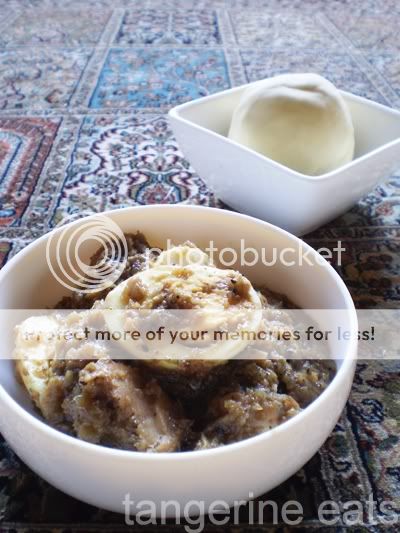
 Doro wat served with fufu
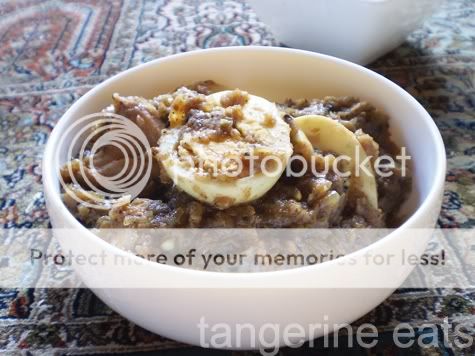
Doro wat is a wonderfully earthy and sweet red chicken stew originating from Ethiopia. It's cooked long and slow, like many African dishes, using onion as a base flavour. The method is very particular and interesting - it calls for 3kg of onions cooked over medium-low heat for an hour with no added liquids. Oils and spices are added, then chicken that has been soaked in vinegar and lemon juice, more ground spices and finally, hard-boiled eggs. The result is a rich, thick and dark stew that looks like a North Indian or Nepalese curry. The texture is very close to dhal and madras but it is much sweeter than any curry I've ever tasted.
This took me almost three hours to make. First I made the niter kibbeh. I love that I was confident about making it a second time 'round and I didn't have to stress over a pot of hot butter. Next I chopped the onions in a food processor and cooked it for an hour until reduced. To that I added olive oil, niter kibbeh and berbere.
 I found the next step interesting because I'd never done it before. I soaked chicken pieces in 2 parts vinegar and 1 part lemon juice for 15 minutes before cooking. This keeps the chicken tender and juicy even after the long cooking process and you can't taste the vinegar or lemon in the finished dish. (This is a fantastic little trick for stews and pies!)
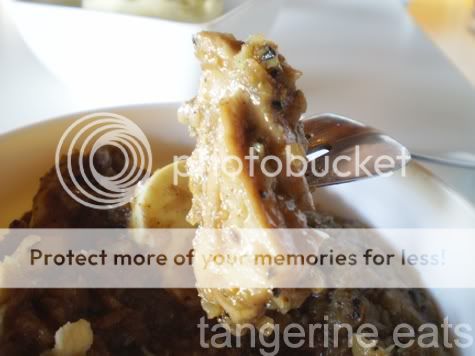 Look how succulent that piece of chicken is
Cardamom seeds, nigella seeds, ajowan seeds, black peppercorns and salt are ground in a mortar to a powder and stirred into the stew. When the stew has reduced and the chicken is cooked through, hard-boiled eggs are added before removing from the heat.
 Fufu
FufuDoro wat is traditionally served with injera but since I couldn't get my hands on any, we had it with fufu, an African starch staple made from dried and ground plaintains. The flour is mixed with water until a thick paste forms, then it's kneaded over heat with a wooden spoon and moulded into a ball by hand. It tastes like a dry and starchy potato mash and is great with stews and soups. I loved ripping little bits off with my fingers and eating it with mouthfuls of chicken.
 Recipe by Karim Degal from the Food Safari cookbook.


