Showing posts with label almond. Show all posts

Sunday, July 25, 2010

Lunch Special @ Restaurant Balzac

141 Belmore Rd, Randwick
French and English restaurant
Book online or call 02 9399 9660
$35 pp for a set menu each Friday


My first impression of Restaurant Balzac (awarded 2 Chef's Hats since 2008) is that it's about the food. The restaurant is tucked away modestly on the busy Belmore Rd in Randwick. The decor is simple, French countryside, and during the day it's bathed in natural sunlight. The service is professional but not snooty. It is perfect for a quiet meal, maybe with a few friends, but there is nothing quiet or understated about the food.

This menu is from a few weeks ago. I thought it was an elegant combination that was perfect for the middle of Winter. The flavours were hearty and complex yet balanced and fresh. Everything was cooked to perfection, the textures were distinct and I cannot rave enough about how good it all tasted.

On top of that, the service was flawless. I had no complaints about this experience. For $35, this is a great way to try what Restaurant Balzac has to offer.

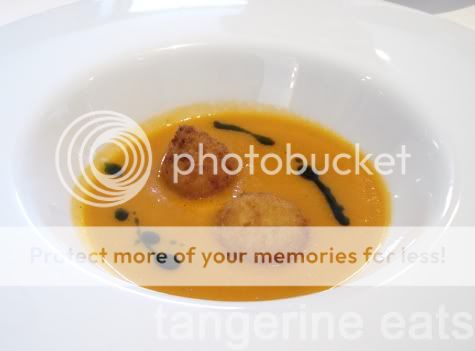
Baked tomato soup with feta arancini

Slow roasted leg of lamb with bean and lentil ragout

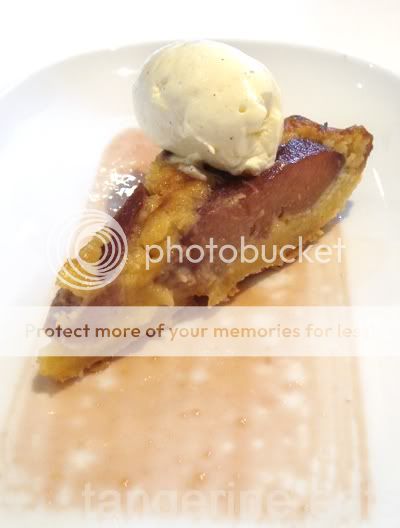
Poach quince and almond tart with Chantilly cream

Tuesday, April 6, 2010

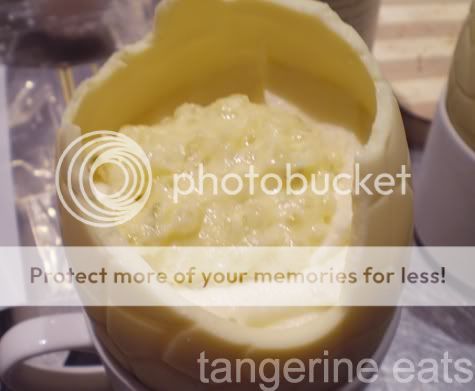
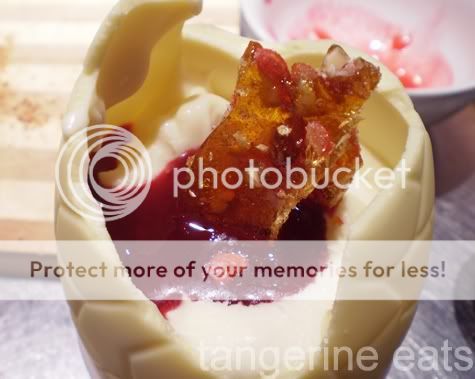
Easter Egg Mousse Cups

It's no secret - I am a very busy lady. I wish I could say it's because I lead an exciting life, but I can't. No, that's not true - today I cracked open a double-yolked egg. Anyway, spare time is hard to come by and over the four day Easter long weekend, I could only find four consecutive hours to shop for ingredients and cook. This really put a kibosh on my dream of making something extravagant like a simnel cake (oh cake with balls of marzipan, fate will bring us together one day).

So I decided to turn something simple into something exciting: chocolate easter eggs, filled with chocolate mousse, filled with a choice of toppings.

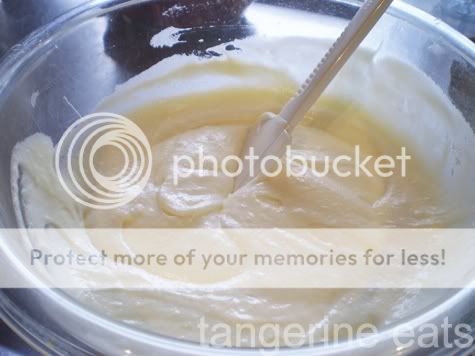
I used my chocolate mousse recipe with white chocolate.

Even though it sounds dead easy, there was a little drama. After buying two easter egg moulds from Wheel & Barrow ($6.95 each), I got home and realised they were useless unless you wanted giant balls of solid chocolate. I cheated and drove back to Chatswood Chase to buy pre-made chocolate eggs, but if you want to make easter eggs yourself, opt for thin and flexible plastic moulds and use lots of oil.

The fillings were the most fun to make, and Dan even helped out! After the beautiful Easter dinner Dan's mum prepared for us, Dan and I served up these babies while everyone picked which topping they wanted.

Butterscotch sauce (recipe courtesy of smitten kitchen)

¼ cup butter
½ cup packed brown sugar
½ cup heavy cream
½ teaspoon sea salt
1½ teaspoons vanilla extract

Melt butter over medium heat and add sugar, heavy cream and salt. Combine well. Remove from heat and add vanilla extract. You can add more salt to taste. I love the contrast of sweet and salty in dessert.

Lime and tapioca pudding

100g white chocolate
½ cup heavy cream
Zest of 1 lime
Juice of ½ a lime
2 tablespoons tapioca seeds

Simmer tapioca seeds in water for 15 minutes or until they turn translucent. Heat chocolate, cream and lime zest over low heat. Combine well. Remove from heat and gradually whisk in lime juice (like you would when whisking lemon juice into hollandaise sauce). Drain tapioca and stir in. This has the wonderful texture of rice pudding and tastes heavenly.

Raspberry with vanilla almond praline

1 punnet raspberries
1¼ cup sugar
Handful of candied vanilla almonds

Heat raspberries and ¼ cup of sugar over low heat for 10-15 minutes, stirring occasionally. Push through a fine sieve and you have a raspberry coulis. Set aside. Heat 1 cup of sugar over low heat until it caramelises. Place the almonds in a ziplock bag and crush with a mallet or rolling pin. Lay out in a flat layer on a baking tray, lined with greaseproof paper. Pour caramel over and set in the fridge. Score the praline and break into pieces to serve.

Salted duck egg yolk

I was most excited about this one purely because I was so curious about whether or not it'd taste good with chocolate (it works with moon cake, so why not other desserts?). You can buy salted duck eggs from Asian grocery stores or you can make them yourself by preserving duck eggs in salt water for 3-4 weeks. I love the texture of salted duck egg yolk, it's so unique. It's not as dry as chicken egg yolk (when cooked through), it's firm to the touch but it melts in your mouth. As I suspected, it worked amazingly well with the chocolate mousse. It was slightly sweet, slightly salty, and with the mousse it was like eating moon cake ice cream.

I hope everyone had a lovely Easter weekend. I cannot wait for the carnie food at the Royal Easter Show!


Friday, March 19, 2010

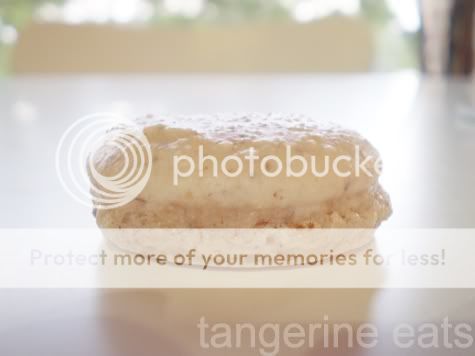
Macarons Part I: Basic French Macaron Shell


They say that making macarons is an endeavour best left to the French. After several failed attempts, I realised that there is a lot of wisdom in that adage.


Except that when I want something, I will not stop until I succeed. Maybe it's the law student ambition in me; maybe it's my passion for food that doesn't let me shy away from a challenge.


Using David Lebovitz's blog as a starting point, I read and read about the meticulous method of making macarons. As Lebovitz explains in "Making French Macarons: Instructions & Recipes", making macarons is more about technique rather than following a recipe. For tips on macaron shell technique, I found David Lebovitz, Duncan Markham at Syrup and Tang and Corry at Bake It Off to be the most useful sources on the internet.

I tried out two recipes: Duncan Markham's recipe for a basic French macaron and Pierre Hermé's recipe for hot sugar syrup macarons. These recipes were by no means fool-proof or simple to master because they didn't involve the use of cream of tartare or lemon juice to aid the formation of stiff peaks in the egg whites. It took me about 15 eggs, almost 1kg of almond meal and 3 whole days in the kitchen to make a decent macaron shell. There were tears, tantrums and the spontaneous shouting of "Why!" and "It's not fair!" in my sleep. But imagine my joy when I'd made a bona fide French macaron!


However, it was a long learning process. My first few attempts came out porous and deflated. I couldn't understand why - I'd followed the recipes to the T. Dan's mother Barb suggested that I start from basics, beating an egg and making meringue. It made sense, getting to know the science of how the ingredients interact with each other, taking one step at a time. So that's what I did - no colouring and no added flavours (my ambitious strawberry syrup did not work with the macaron batter). I focused on the 4 ingredients used in Duncan Markham's recipe: egg whites, almond meal, icing sugar and castor sugar.

Working with the 4 ingredients


Egg whites


Using 1 egg, I tested how far I could beat it without curdling it. This gave me a better grasp of what soft, medium and stiff peaks looked like. The best way to test which stage you are at it is to stop beating every minute or so and lift the beaters out to see. When it reaches soft peaks, the egg whites will look like a sudsy foam with visible bubbles. Medium peaks means that the bubbles are barely visible and when you lift the beaters out, it will rise up and flop back down. I couldn't actually reach stiff peaks without castor sugar (as it helps bind egg whites). You will know you've got stiff peaks when the mixture is glossy, has obvious ripples and when you lift the beaters the peak will stand up on its own. Edit: Between medium and stiff peaks, the castor sugar will make the egg whites increase in volume. If it decreases in volume again, you've overbeaten it. However, it is salvageable. Bake at a lower heat for longer so that you don't get a hollow shell.


Beating egg whites is finicky enough but with macarons there are about 4 other fronts you have to worry about:


(1) Fineness and dryness of almond meal
Whether you use whole almonds (raw, not blanched) or packaged almond meal from the supermarket (which I found doesn't work that well anyway) you need to prep it before using it in macaron mix. Fineness isn't crucial but creates a smoother shell so that it's nicer on the eyes. Dryness, however, is key because excess moisture will cause the egg whites to collapse. Preheat the oven to 150°C. Blitz the almonds or almond meal in a food processor for 1 minute. Remove lid and use a spatula to loosen all the ground almond at the bottom. Blitz for another minute. Spread into a thin layer on a baking tray. Put in the oven for 5 minutes. Cool completely.


(2) Dryness and temperature of egg whites
As egg whites contain water, you want to dry out that excess moisture for perfect macarons. To do this, separate your eggs 2 days in advance. Place the egg whites in a shallow bowl and let stand at room temperature. You can cover it, but use something that'll let it breathe, like a tea towel. Egg whites beat better at room temperature, so don't fridge them during these 2 days!


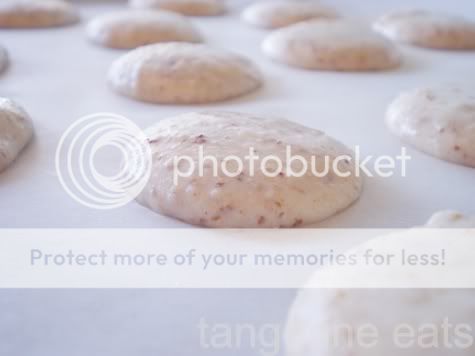
Just piped


Rested for 20 minutes


(3) Speed of incorporation
One of the most important things I learnt during my mistake runs is that you need to be fast when incorporating the dry ingredients with the wet ingredients. If you work too slowly, the egg whites will deflate and your macarons will be firm and chewy. When folding the dry ingredients into the egg whites, scrape the edge of the bowl in a semi-circle, then fold into the middle. You want to get rid of the excess air so use a bit of force.


(4) Prepping your utensils
For beating egg whites in general, always beat in a clean glass bowl, making sure that the bowl and the beaters are completely dry to begin with. Use the smallest bowl you can so that the egg whites will get maximum beatage. When baking, use thick baking trays, or stack two together (with no gap in between), lined with baking paper. You can stick down the baking paper with blobs of macaron mixture in each corner.


Macarons au blanc monté (French meringue)
Recipe courtesy of Duncan Markham ("La Macaronicite 2: basic technique and simple macaron recipe", Syrup and Tang)


1 part egg white (50g)
1.3 parts almond meal (65g)
1.6 parts icing sugar (80g)
0.8 parts castor sugar (40g)


Blitz almond meal and icing sugar in a food processor for 1 minute.


Beat the egg whites on a medium speed until medium peaks form. Gradually add castor sugar and beat until stiff peaks form.


Sprinkle half of the dry ingredients over the egg whites and fold in with a spatula. Fold in remaining dry ingredients. This is also when you would add food colourings.


When done, you should be able to make a ribbon on top that takes at least 30 seconds to disappear.


Prep baking trays and spoon batter into piping bag with a 1cm wide nozzle.


Holding the nozzle close to the baking paper, pipe your macarons about 4cm apart. Try to make them round and flat (you can dip your finger in water and smooth out the tops if needed).


Tap the tray on a flat surface to get rid of excess bubbles.


Preheat the oven to either 120°C (baking time: 20 minutes) or 180°C (baking time: 9 minutes).


Rest the shells after piping for at least half an hour in a dry place.


Bake for 18-20 minutes in the middle shelf. If doing more than one tray, bake one tray at a time.


Remove baking paper from tray and cool on a wire rack. Gently remove macaron shells from baking paper and continue cooling face up on the wire rack.


Refrigerate in an air-tight container for at least 1 day before filling.


9 minutes at 180°C


20 minutes at 120°C


Stay tuned for the hot sugar syrup recipe and ganache filling!